honey is the only food product that never spoils. there are pots of honey that are over five thousand years old and still completely edible
i also want to point out we know it tastes the same even after thousands of years b/c archaeologists who discovered two thousand year old honey tasted it. presumably right after they looked at each other and went “what the hell here goes nothing”
I’m pretty sure they also identify human remains by taste. Archaeologists are straight up freaks.
No, no no… you identify bone from rock or other substances by touching it to your tongue. If it sticks, it’s bone. The taste itself has nothing to do with it. And most archaeologists won’t lick human bones if they know they’re human.
…and I realize that doesn’t actually do much to prove archaeologists aren’t freaks.
mai nam is jane and wen i dig i fynde some roks both smol and big i put my tung upon the stone for science yes i lik the bone
some followers may already know this about me but one of my favorite plants is a cool neato technical wildflower called the Eastern Skunk Cabbage.
this is what a blooming Eastern Skunk Cabbage looks like:
these plants are so comically disgusting like
-they smell like rotting flesh if you accidentally crush the outer part of the flower
-they like to live in mud and bogs and prefer environments where they can have cold running water over their roots at all times
-they’re pollinated by flies and beetles
-they bloom in really late winter and casually heat themselves up and just burn through the snow. like they just casually do that for two weeks out of the year
-these bois are not annuals. no. these bois are deep rooted and there to stay bitch. like if you cut their main tuber in half, you can see them already starting growth for the outer part of their flower for blooms up to ten years in the future.
-i did an entire research project on them and their heating mechanisms because theyre a really good example of the protein im interested in, the Alternative Oxidase Protein
-these bois actually measure the exact outside temperature and adjust their inner bloom temperature to keep it perfectly steady. we dont know how it does this yet, we just know that the measuring mechanism is in the outer part of the flower.
-they’re native flowers in the midwest and up through canada
-theyre my stinky muddy bois and i love them
I’ve never seen these! Only the yellow ones that smell like weird, not like rot. Strange.
i see that you’ve encountered the western skunk cabbage. it does not heat up and is boring. 0/10 would not recommend
excuse me, but i just so happen to know that the western/yellow skunk cabbage is native to the pacific northwest, that i love it and experience joy whenever I see & smell them in a swampy forest, and that theyre cute. just a psa
i have brought shame upon my family i thought they were native to asia
also we’ve passed into the point at night where skunk cabbage discourse is a thing
Delighted to say my first academic comic essay is up at EdgeEffects.net where I delve into constructions of capital-N Nature as it relates to prairie restoration. Check it out!
I never thought a post about rabies would be re-blogged as many times as it has! I’m glad that people are paying attention and hopefully learning something after reading it. Since that post I have gotten a few questions and am also seeing questions as well as some blatant misinformation in re-blogs so I would like to hopefully clear all of that up.
First let’s make sure we all understand what rabies is. Rabies is a virus, specifically a Lyssavirus. The virus is found all over the world although there are some places where it has been eliminated or never existed in the first place. Australia doesn’t have rabies but it does have a bat Lyssavirus which is similar although they don’t really like to talk about it. Rabies is only really a problem for mammals (we now believe some birds can be infected but let’s not go there). Any mammal can be infected but in the USA there are different varieties of rabies that tend to infect specific mammals based on geographic location. The Eastern U.S. has lots of raccoon rabies, North is skunk, Central/South is skunk and fox, Southwest has fox, and the West is mainly skunk. Puerto Rico is unusual because their main rabies vector is the mongoose. Bats are also rabies reservoirs pretty much everywhere. This does not mean that if you are bitten by a skunk in Puerto Rico you don’t have to worry about rabies, just that a mongoose is more likely a carrier. We in the U.S.A. are lucky. Because of our relative isolation from other land masses and our vaccination campaigns, we don’t worry about rabies so much. In other parts of the world like India or Africa, people are killed by rabies every single day. The biggest carriers there are not wildlife but dogs and cats. Can you imagine? Walking down the street and being bitten by a stray dog and then you’re dead in a few weeks. That happens every single day.
Luckily rabies virus only exists in a few select types of body tissue/excretions, specifically saliva and nervous system tissue. Bites are the main way people and other animals are infected although getting saliva in an open wound or on a mucus membrane could also result in infection. Most people are not going to rub brain or CNS tissue on open wounds so that is not a common route of exposure. Theoretically an animal could have saliva on its claws and then scratch you, infecting you with rabies but this is so far of the realm of probability that a scratch is not usually considered exposure. Blood, urine, and feces do not contain rabies virus.
Once an animal or person is bitten the virus makes its way into a nerve and travels up the nerve toward the brain. This can take weeks or months depending on the location of the bite and the species infected. After the virus gets into the brain and multiplies it will head into the salivary glands. Dogs and cats can have enough virus in the saliva to spread it even before they are showing signs. This is likely the same with other species as well. This means that just because an animal is behaving normally does not mean it isn’t rabid.
Animals tend to manifest rabies in two different ways: “dumb” rabies or furious rabies. With dumb rabies animals seem slow, they will just stare off into space or wander around seeming confused. Furious rabies is where animals become highly aggressive, froth at the mouth, and lose inhibition. Again, behavior is not a great indicator of rabies status and some animals will exhibit some signs but not others.
What happens if a pet is bitten? This really depends on the vaccine status of the animal, the species of animal, and where the pet lives. Generally a dog or a cat that is up to date on rabies will be quarantined for a prescribed amount of time and re-vaccinated. A dog or cat that is overdue for vaccination will be quarantined for a longer period of time and then vaccinated. This quarantine is to make sure if the pet was infected, we give the virus time to show symptoms without being a danger to the public.
Because wild animals have not been studied to see if the rabies vaccine is effective, they are always euthanized and tested for rabies. Even a pet skunk, raccoon, etc. is considered wild and will be euthanized. We just do not know if the rabies vaccine is effective in them and the risk to human life is too great. Even in dogs and cats the rabies vaccine is not always 100% effective.
People that get rabies tend to feel sick, as if they have the flu. This then turns into CNS signs like confusion, aggression, delirium, difficulty sleeping, ataxia, etc. ONCE A PERSON SHOWS SIGNS OF INFECTION THERE IS NO TREATMENT! This is why rabies is such a huge health concern and why we play safe and test animals even if there is a suspicion of infection. People die. That’s it. Let that sink in.
If you are infected with rabies and do not get immediate treatment you will die. There is no alternative. 10 people in the entire world have survived rabies, 8 of those people had been vaccinated against it previously. 2 people without pre-exposure vaccination have survived rabies, in the entire world. And these people are not “normal”, they will have medical problems for their entire lives. The fact that they survived is the closest thing to an honest to goodness miracle that I can think of.
RABIES WILL KILL YOU. YOU WILL DIE IF EXPOSED TO RABIES AND DON’T GO TO THE HOSPITAL.
Ok. So what will happen when you go to the hospital? Many people are afraid of rabies treatment because they have heard it’s an ungodly number of shots into their abdomen and horribly painful. That is not the case but let’s pretend for a moment it is. Let’s say you need 50 injections directly into your abdomen and they hurt a lot. The alternative is death. I think the shots are preferable. In reality, if you have never been vaccinated against rabies here is what happens:
Your wound will be cleaned
You will get an injection of immune globulin
You will get a rabies vaccine (day 0) in your arm
You’ll come back on days 3, 7, and 14 for rabies vaccines
That’s it. 5 total injections spread out over a two week period. None of them given in your abdomen.
If you have previously been vaccinated you will simply get two vaccines, 4 days apart.
It is ridiculous that we even have to discuss paying for life saving medical care, but that is the case here in the USA. As someone who had to pay off an emergency surgery over a decade, I completely understand the fear of medical bills. Again though, the alternative is death. Bills are better than death.
If you have medical insurance your rabies treatment should be covered. If you don’t, you still need the treatment. Bills are better than death. Many hospitals have discount programs if you ask, you will have to fill out lots of paperwork but it will lower the cost. You can also sign up for prescription assistance via https://www.pparx.org/prescription_assistance_programs/sanofi_patient_connection it’s free and it covers the rabies vaccine and immune globulin. Unfortunately the less money you have, the more paperwork you will need to fill out but your life is literally on the line.
Lots to read but I hope that it helps clear up some confusion. Speak to your vet and human physician if you have questions and please, always go get medical help if you are bitten by a wild animal or pet that might have rabies.
@theexoticvet, thanks for throwing out some more basic rabies information! Some stuff I want to add.
Many exotic animals species are vaccinated for rabies off label – pretty much any zoo mammal, for instance, will have had one – but this does not mean they are legally protected and they will still be euthanized if they bite someone. This is something a lot of people are unaware of. The rabies vaccine has not be proven effective by the government for non-domestic animals, which means nobody is not willing to accept the liability if it doesn’t work. There’s a good amount of anecdotal evidence that it does protect exotic animals (from known exposure situations that were quarantined monitored), but this is not a guarantee of safety and does not change the fact that any non-domestic animal must be euthanized and tested, no matter if they were vaccinated off-label or not.
Rabies shots, from what I know of them, contain about 1ml-2ml of fluid. It’s a similar amount of fluid as the intra-muscular birth control injection (depo) – so it’s uncomfortable for a day or so, but not nearly the same as the horror stories you’ve heard about what the shots used to be.
If you’ve encountered a potentially rabid animal, do not try to take care of it yourself. Get anyone who might be nearby further away, call animal control, and keep an eye on it. Animal control will have the correct tools and training to safely capture and contain a rabid animal. Please don’t try to shoot it if you’re somewhere that’s legal – the last thing you want to worry about is exposure to aerosolized brain matter. This is one of those really important times to let the professionals do their job.
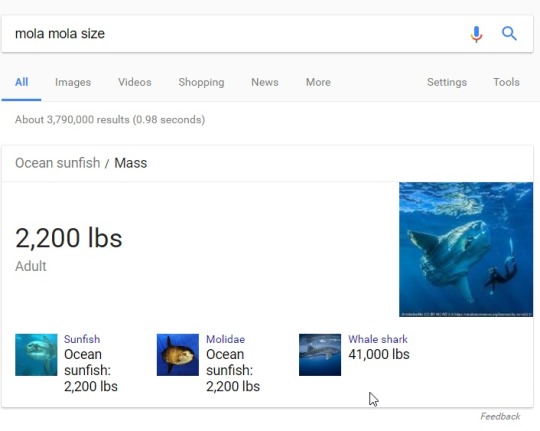
I love them so much because they’re about as sharp as a baseball and their anatomy is ridiculous to the point of them literally being classified as plankton for years because they just sort of get blown around by the ocean and look confused, but because they lay more eggs than ANY OTHER VERTEBRATE IN EXISTENCE, evolution can’t stop them
Why is no big predator coming and gnawing on them?
Their biggest defense is that they’re massive and have super tough skin, but they do get hunted by sharks or sea lions sometimes and they just sort of float there like ‘oh bother’ as it happens
Even funnier, because they eat nothing but jellyfish they’re really low in nutritional value anyway, so they basically survive by being not worth eating because they’re like a big floating rice cracker wrapped in leather.
I think I am a species pragmatist. There is no such thing as an easily identifiable species, and species concepts are not one-size-fits-all, but the concept of a species is useful, and we can use it as long as it remains constant throughout the study, or survey or whatever you’re writing.
Fun fact: Gender and Sex are both human made constructs designed to describe natural phenomenon but are not actually based in any biological reality. Much like the concept of “species”, it’s a model, and no model is an actuality – then it would not be a model, it would be a fact.
In truth sexual characteristics are diverse and varied and do not always match up with sex chromosomes; also, a sexual “binary” of sorts is not constant amongst all living things, and most organisms have other systems of reproduction.
Furthermore, gender is the suite of societally-defined social roles and behavioral characteristics that is typically assigned based on the externally perceived sex of a child; and does not actually have anything to do with biology – even less so than sex. Even though it is assigned based on this externally perceived sex, a person’s gender does not have to remain with the one assigned; much as we don’t determine people’s careers based on who their parents were anymore, your birth has no limitation on who you are and what gender identity you construct for yourself. Since it is a societally defined construct, people can and do construct more than the two traditional ones, and all are valid.
Just because you cannot handle your societally constructed worldview surrounding sex, gender, and genetics being dismantled by sociology & biology itself doesn’t mean, additionally, that you have the right to make other people feel unsafe and uncomfortable – in short, that you have the right to remove people from moral consideration – simply because you don’t like having your world view being dismantled. Believe it or not, the complexities of human behavior & the diversity of sex and reproduction in life cannot all be covered in a simple high school biology class.
So next time you want to say “didn’t you pass biology” remember: a biology PhD student, who graduated from the University of Notre Dame with an actual degree in Biological Sciences, has reminded you that you’re wrong.
There are more than two genders.
The end.
Sex is biological tough… It’s not a social construct… It’s not time, racism etc. It’s a physics attribute.
Why are you trying to argue with someone who said species is a constructed model and not a fact? You’re not going to change someone’s mind when they’re that far down the rabbit hole
Me: Spends 6 years intensely studying biological science and evolution at two major universities with widespread academic acclaim, earning honors and high GPAs and am currently working on a PhD in the subject of biodiversity and evolution
You: Somehow thinks they know more because you took a couple of classes
Lol
…Buddy. Buddy. Dude. I really don’t think you want to open this can of worms.
I mean, I know that in school they teach you a very clean, concise, definitive way of doing things and you’ve probably learnt something like the definition of a species is a population of organisms that are able to reproduce and produce viable offspring, or something. But I mean literally anyone who has done even undergrad biology can tell you that that statement is incredibly reductive and incredibly controversial in the scientific community [1][2]. In fact, you probably don’t even need a background in biology to spot the obvious flaw in the logic there, which is the fact that organisms classified as different species do reproduce and produce viable offspring. Quite a lot, actually. Lions and tigers (Panthera leo and P. tigris), coyotes and grey wolves (Canis latrans and C. lupus)… In fact, there’s even a word for new species arising through hybridisation between existing species – hybrid speciation [3]. The great skua (Stercorarius skua) is believed to be an example of this in animals [4], and another interesting one that may be pretty much hybrid speciation in action (though not nearly anything that can be called a new distinct species yet) is the so-called “Eastern coyote”, a population of wild coyotes in the eastern US that are mixed with grey wolf and domestic dog, and can contain as much as 40% non-coyote DNA [5].
And, in fact, the ability of two organisms to reproduce and produce viable offspring actually has very little with how we choose to classify them, because evolutionary and genetic relationships are rarely that simple. For example, some species that are the same genus – e.g. horses (Equus ferus) and donkeys (Equus africanus) can interbreed, but their offspring are usually sterile [6], while other species that are different genera to each other can interbreed to produce intergeneric hybrids, some of which are even fertile (for example crosses between false killer whales (Pseudorca crassidens) and bottlenose dolphins (Tursiops truncatus) [7], or between king snakes (genus Lampropeltis) and corn snakes (genus Pantherophis) [8]). Most “exotic” domestic cat breeds (e.g. Bengals and Savannahs) also fall into this category – for some reason felids are genetically Weird in that a wide variety of species in the family Felidae seem able to interbreed with each other, no matter how different or distantly related they are. I mean…
Look at this shit. Now bear in mind that the domestic cat (Felis catus) is known to be able to interbreed with species in the caracal, ocelot, lynx and leopard cat lineages in addition to those in its own lineage, and if that wasn’t bad enough puma/leopard hybrids are a thing that exist. Those species aren’t even in the same subfamily, let alone genus or genetic lineage – the leopard is classed as subfamily Pantherinae, genus Panthera (P. pardus) while the puma is classed as subfamily Felinae, genus Puma (P. concolor).
Although these aren’t even the most distantly related species that are able to interbreed – domestic chickens (Gallus gallus domesticus) are known to hybridise with guineafowl [10], and the offspring of these crosses are interfamilial hybrids since chickens and guineafowl are classified in different families (chickens belong to family Phasianidae, guineafowl to family Numididae).
And of course another place where the “able to interbreed and produce viable offspring” definition falls apart is with organisms that reproduce asexually or without the need for a sexual partner, which is even more complicated when you consider that some species (for example, some species in the paraphyletic whiptail lizard genus Cnemidophorus) aredioecious, meaning they have separate sexes, and reproduce by producing gametes via meiosis, but have actually lost the ability to reproduce sexually somewhere along the evolutionary line – these species reproduce predominantly or entirely by parthenogenesis (essentially a form of self-cloning) and the Y chromosome has been entirely lost in the population. This also ties into hybrid speciation because it is believed that these parthenogenic species arose from hybridisation between two or three sexual species [11][12], leading to polyploid individuals (i.e. those with ‘extra’ sets of chromosomes) – for example, the all-female parthenogenic species Cnemidophorus neomexicanus is actually a hybrid of two sexual species, Cnemidophorus inornatus and C. marmoratus (or C. tigris, according to Wikipedia), and thus new individuals of this species can be formed either by parthenogenesis in a single C. neomexicanus parent, or sexual reproduction between a male and female C. inornatus and C. marmoratus/C. tigris [13]. Some female parthenogenic species are also able to interbreed sexually with males from sexual species, resulting in hybrids which may or may not also be parthenogenic [14].
So you can ask, well what the fuck is a genus, or a species for that matter, if it doesn’t necessarily indicate whether two animals are genetically similar enough to interbreed or not? And, more to the point, is there a strict set of quantitative criteria that defines whether two populations of organisms are classified as the same or different species? And I mentioned speciation, which brings up the question, when exactly in the process of evolution does one species actually become another?
The thing is, there aren’t actually definitive answers to these questions – if you ask a bunch of biologists what a species is, it’s likely you’ll get different answers. “Species” also has a number of definitions [15][16], mainly depending on the type of organism being studied and the angle it is being studied from. For bacteria, for instance – where “similar enough to reproduce” really isn’t applicable – I think the general consensus is that individuals are grouped together if their genetic similarity to one another is 97-98% or higher, while a similar definition of “organisms that are highly genetically similar to one another” tends to be used for asexually reproducing organisms such as some plants, and parthenogenic animals like whiptail lizards or Bdelloid rotifers (which does of course raise the question of what exactly “highly similar” means – any decided-upon cutoff point will necessarily be somewhat arbitrary). Such groupings of organisms may be referred to as phylotypes to distinguish them from the reproductive definition of a “species” [17]. Likewise, a lot of ecological writing will define species and speciation according to reproductive isolation, which isn’t necessarily synonymous with reproductive compatibility – reproductively isolated populations may be genetically able to reproduce, but be prevented from doing so or unlikely to do naturally so due to differences in geographical location, habitat or behaviour (think lions and tigers). These are some of the many different “types” of species, with either competing or overlapping definitions of what exactly constitutes a species in each case:
Morphological or typological species (morphospecies)
Phylogenetic species
Evolutionary species
Genetic species
Genalogical concordance species
Reproductive species
Autapomorphic species
Ecological species
Recognition species
Phenetic species
Isolation species
Cohesion species
…You get the idea.
For vertebrates, I think generally the two most used definitions are the biological species concept (BSC) and phylogenetic or cladistic species concept (PSC), which differ in their criteria for what they consider a species [18][19]. PSC, for example, doesn’t include a subspecies category while BSC does – and thus, some organisms that are classified as subspecies of the same species under BSC are either classified as different species or are lumped together as the same species under PSC. For example, grey wolves and domestic dogs. The domestic dog is/was often considered a separate species to the grey wolf, for obvious (morphological/behavioural) reasons – the wolf was Canis lupus, the dog C. familiaris – but since dogs are descended from wolves (a now-extinct lineage of wolves, not modern grey wolves [20], but Canis lupus nonetheless) they are more properly classified as a subspecies, C. l. familiaris. Likewise, having also ultimately descended from wolves, the dingo is officially classified as C. l. dingo, although there is some debate about that – at one stage I remember it being classified as a “subspecies” of domestic dog, Canis lupus familiaris dingo (and it’s still, to my knowledge, widely considered to be descended from domestic dogs [21][22], in which case the second name would be more correct), while still other people classify it as a completely separate species, Canis dingo [23]. You can see why species boundaries and definitions can get murky, especially when the exact evolutionary origins of a particular animal are unknown or hotly contested.
In fact, canids as a whole are kind of a mess when it comes to phylogeny. How many species of wolf there are really depends on who you ask – some populations traditionally classified as subspecies of the grey wolf, for example the Indian wolf (traditionally C. l. pallipes), the Himalayan or Tibetan wolf (traditionally C. l. chanco) and the Eastern wolf (traditionally C. l. lycaon) have been suggested instead to be classified as separate species – Canis indica, Canis himalayensis and Canis lycaon, respectively [24][25]. Likewise, just last year it was discovered that what was thought to be an African subspecies of the golden jackal (Canis aureus) had in fact been misidentified and was instead an undiscovered species of wolf, now the African golden wolf (Canis anthus) [26]. And then there’s also the fact that, despite being called “jackals”, the black-backed and side-striped jackals actually aren’t very closely related to the golden jackal, or indeed to any of the rest of the genus Canis [27]. In fact, going by the cladogram below, you can see that the African wild dog and dhole – both of which are classed in their own, unique genera (Lycaon and Cuon, respectively) – are actually placed closer to wolves, golden jackals and coyotes than black-backed and side-striped jackals are, even though both of the latter species are considered part of genus Canis (the black-backed jackal is C. mesomelas and the side-striped is C. adustus). Many sources also say that these two species differ from the rest of the group in that they have only 74 chromosomes, while wolves, coyotes, golden jackals, African wild dogs and dholes all have 78. This makes the moniker of genus Canis somewhat useless when trying to determine exactly how genetically similar these animals actually are to one another.
And this isn’t even touching the issue of the “red wolf” (Canis rufus), a critically endangered so-called “species” of wolf closely related to the grey wolf, eastern wolf and coyote, which more recent molecular and genetic analysis has revealed may simply be a wolf/coyote hybrid [29]. Of course these classifications aren’t set in stone, either – new studies and discoveries are constantly uprooting and rewriting our knowledge of phylogenetic and evolutionary relationships among species. Sometimes it’s also pretty much impossible to accurately represent the relationships between similar-but-distinct populations using only the terms “genus” and “species”, which is where alternate concepts like species complex, subgenus and superspecies come in.
Another feature of evolution and speciation that makes classification difficult is what are known as ring species, in which a series of neighbouring populations of organisms may evolve divergently (i.e. undergo allopatric speciation) in such a way that each geographically adjacent or overlapping population can interbreed with the next, but the last population in the “ring” has diverged to the point that it can no longer interbreed with the first (basically, population A can interbreed with population B, B with C and C with D, but D can no longer interbreed with A).
When does the actual split occur, and at what point in the ring can we consider the populations to be different species? We just don’t know. (And in some cases this is considerably more messy and complicated than even the ring species model makes it seem [32]). The point is, though, that there is no definitive, universally agreed-upon cutoff point at which we can say with certainty that two organisms have evolved sufficiently as to become different species, any more than you can definitively say where along a rainbow spectrum of colours red becomes orange or orange becomes yellow. The decision whether to lump or split taxa becomes even more arbitrary in paleontology than it is with extant species [33][34] – when you’re working with an incomplete fossil record and pretty much going entirely on morphological similarities since genetic or molecular analysis often isn’t possible, there isn’t really a way to conclusively determine whether that specimen you found represents a new species, a new genus, or is simply a larger/smaller/juvenile/unfortunate-looking version of an already-described animal. Many specimens now believed to be juveniles of previously-described species were originally believed to be completely new ones – for example, Nanotyrannus is now often (but not universally) agreed to be a juvenile Tyrannosaurus rex [35], and Dracorex and Stygimoloch are considered immature specimens of Pachycephalosaurus [36]. And then there was the whole deal where Brontosaurus didn’t exist for a while and then it did again and it was all very confusing [37].
Obviously, at the end of the day, a zebra is materially different from a dog in the same way that, to get back to the original topic, a penis is materially different from a vagina (actually a bad analogy since homologous reproductive organs are much more similar to each other than taxa that have been separated for millions of years, but anyway). The biological differences and similarities themselves exist, but any attempt to categorise and quantify them will necessarily rely on socially constructed and frequently arbitrary models, definitions and assumptions. That’s basically what science is – a continuous (and frequently wildly inaccurate) attempt to try to make sense of reality. We often attempt to understand or make predictions about reality using mathematical or quantitative models of the situation or by sorting things into sets and categories, which is useful and necessary in many cases but is also often far too simplistic to be taken as any kind of gospel truth regarding the actual nature of reality, because simply put reality doesn’t care for or abide by human-made rules and categories. Essentially, we’re trying to find quantitative ways to represent things that are by nature qualitative, and that’s always going to be arbitrary to some extent. Obviously biological characteristics (whether genetic, sexual/reproductive, etc.) objectively exist and would continue to exist if humans and human culture were to suddenly disappear, and in that sense, things like sex, gender and taxonomic classification can be said to be basedin biological reality. But human attempts to define or categorise these characteristics – for example species concepts, the binary model of sex, etc. – are not in themselves biological realities, and are subject to change based on new information. For example, evolutionarily speaking, “reptiles” (as we traditionally understand them) don’t exist [38]. Obviously this doesn’t mean that lizards, tortoises, snakes, crocodiles, non-avian dinosaurs etc. don’t exist or never existed. It simply means that the socially constructed classification of animals into two distinct, mutually exclusive groups called “reptiles” and “birds” is completely arbitrary and not actually the result of any inherent biological reality (in fact the opposite).
I mean I know how crappy the highschool biology syllabus can be @valarie-lynn so I’ll also link you to the Wikipedia page on species and the species problem, and also to somemoreonsex and how it’s just as complicated and arbitrary as the concept of species (from Actual Biologists™) if you’re interested. I’ll also leave you with a quote from Charles Darwin:
“From these remarks it will be seen that I look at the term species as one arbitrarily given for the sake of convenience to a set of individuals closely resembling each other, and that it does not essentially differ from the word variety, which is given to less distinct and more fluctuating forms. The term variety, again, in comparison with mere individual differences, is also applied arbitrarily, and for convenience sake
Well, the unfortunate fact is that, if incubation is interrupted and temp drops during fetal development, the chick is probably not going to make it. It depends on the species and the time and the temperature, obviously, and I am not a birb development expert by any means, but if you’re not sure how long it’s been there… it’s probably a no-go. (I know from experience that fertilized chicken eggs can still hatch after several days out of incubation, but that’s at high summer temps, and chickens are not songbirds.)
if it’s dead or cracked, although it won’t become a bird, it will still provide a great source of food for other animals, so worry not, it will still be useful to nature! Just leave it where you found it and it will be scavenged by rodents, insects, or other birds!
And generally the reason that eggs are on the ground is either wind or predation (if a predator is disturbed while taking an egg, it might drop it intact).




 A Pretty Taste for Paradox