I follow a lot of awesome vegans and a lot of vegan posts pop up on my dash. I’M NOT GETTING INTO AN ARGUMENT ABOUT VEGANISM WITH ANYONE. THAT’S NOT WHAT THIS IS ABOUT. I just feel like I need to address a trend I see pretty frequently:
Anthropomorphism of farm animals.
This is DANGEROUS, for both the animals and the people who believe what’s being said about these animals.
For example, cows.
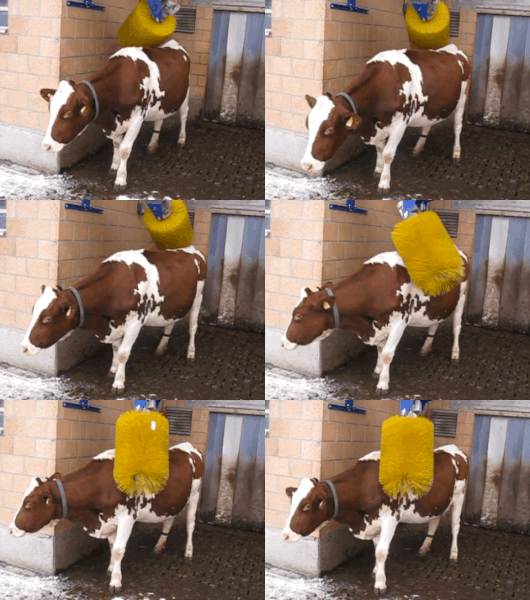
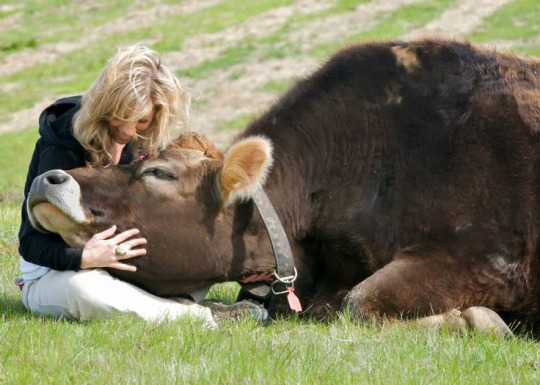
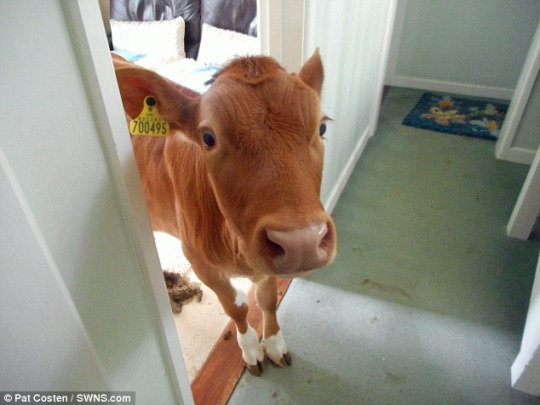
For obvious reasons the images of cows in posts talking about how cows aren’t dumb, unfeeling hamburgers in waiting are generally like this:
And usually they’re accompanied by talk of how they can be trained, how they have best friends (which is actually true!) and how sweet they can be.
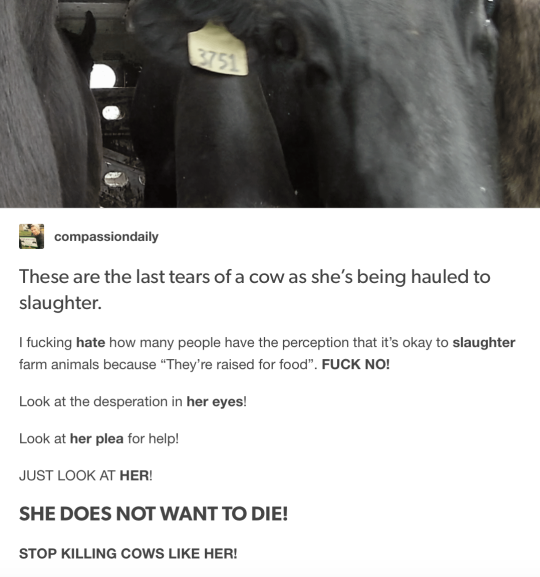
On the other side, there are posts like this going around
Thing is, cows do not cry tears like humans do. In fact, there are a lot of posts claiming to present animals weeping like humans do (and not always by vegans). In fact watery discharge can be a sign of early eye infections in cattle. Claiming they’re tears of sadness normalizes signs of ill health as normal animal emotions. This is also I why I get so worked up over people saying a stressed out dog with its lips pulled back is ‘smiling and happy’.
All of these posts combine to make the popular perception of cows something they’re absolutely not and is very dangerous for people with their hearts in the right place looking to help the world out.
Cows are dangerous. I feel like I shouldn’t have to tell people that a thousand pound animal is dangerous, but I do. Not the people I see on my dash, but actual people looking to interact with actual cows (I work with them). Yes, they can be lovely and docile when socialized and handled correctly and consistently but if you have no way of knowing the cows background you have no way of knowing their temperament. If you decide to volunteer at cattle rescues, this will very likely be the case. Moreover, well socialized and docile cattle ARE STILL DANGEROUS AS FUCK. Even the most tame animals can lash out if in pain, under stress or “out of nowhere” (read: lashing out because from their judgement of a situation in makes sense to them, but you misread their judgement). So you get things like this:
With the huge emphasis on docile cows who are good, loving, devoted mothers it’s understandable someone would want to give her a calming and congratulatory stroke after giving birth.
That cow could have killed her.
This is obviously dangerous for humans but it’s also dangerous for cows. Aggressive animals are often euthanized, no matter what provoked the aggression and it also inflates statistics that could be used as a counter argument to veganism.
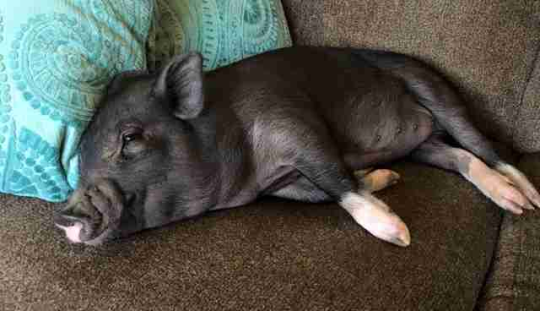
The same sort of thing happens to pigs.
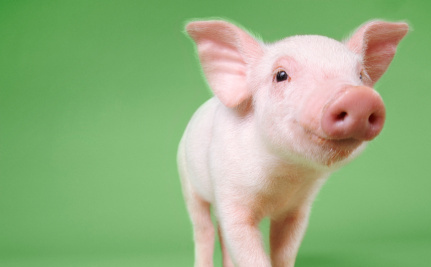
The vegan info posts about pigs tend to use images like this:
Cute, eh? The posts also talk about how intelligent these animals are and how they can be kept as pets. Who wouldn’t want one? Usually people who look into pigs as pets look into ‘mini’ pigs or ‘micro’ pigs. Pigs that will stay small forever. Except even ‘mini’ pigs can grow to a hundred pounds in size and they’re STRONG. I say ‘mini’ because sometimes people are duped into buying regular piglets that are claimed to be fully grown.
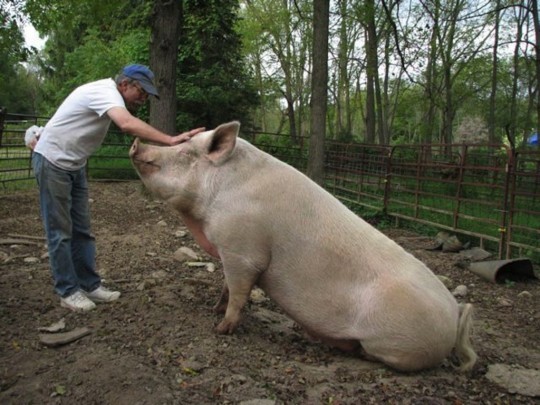
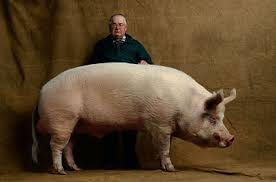
Which brings me back to warning anyone who wants to volunteer at a pig rescue that pigs. are. huge. People mislead into thinking they’re not will likely not keep and care for their little pig once it’s not so little and I don’t know anyone who would/could keep a 500 lb hog in their home and/or backyard.
And, like with cows, they are DANGEROUS.
And, unlike cows, they are not herbivores.
PEOPLE HAVE BEEN KILLED AND EATEN BY PIGS. Yes, eaten. One could argue that this happens when pigs aren’t well socialized and habituated with humans, but if you’re working with a pig you don’t know you have no guarantee that they’re tame.
I could go on, but cows and pigs are the animals I see most represented in these posts (chickens too, but they pose less of a threat, unless you count avian flu) and another thing I see very frequently are cute pictures and videos and cows, pigs, and chickens interacting with dogs. If you’re under the impression that these animals are sweet and docile and your dog is also sweet, what could go wrong?
A lot.
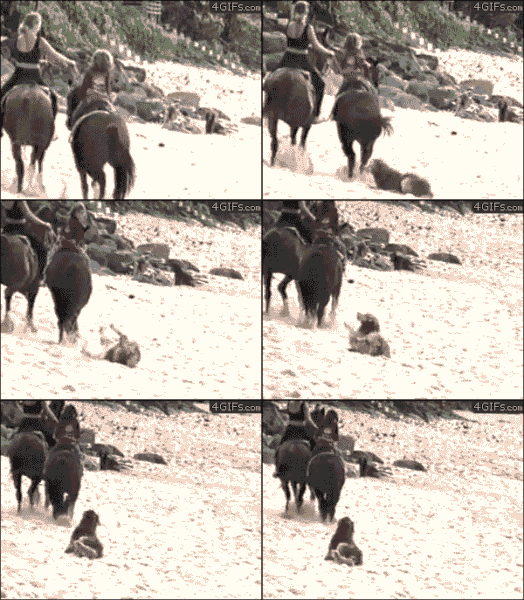
Odds are your animals will not be used to interacting with an animal of that species and these animals ‘languages’ don’t always translate! Animals get things mixed up all the time! The most common one I’ve seen is a dog misreading a cat’s irritated swishy tail as a wagging ‘I want to play!’ tail. Claws to the face aren’t fun, but attacked by a large animal? Possibly deadly. Dogs do not comprehend size and strength and potential for an aggressive strike in the same way that we do. That’s why you end up with things like this:
Again, that dog could’ve easily died OR MIGHT HAVE DIED LATER.
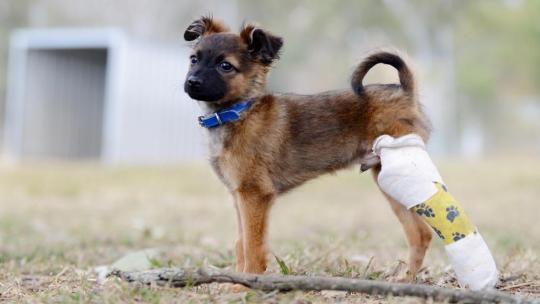
This little trooper was kicked by a cow
Projecting your feelings and ideas onto an animal can potentially kill them. Again, if you have the opportunity to work with these animals KEEP YOUR OWN ANIMALS AWAY.
All of these things remind me very much of the people who claim wolves are nothing but big puppies, or who cohabitant snakes so they don’t get ‘lonely’.
You can’t love and advocate for the protection of an animal when you only love and advocate for the protection of your fantasy of that animal because when real animals fall short of that, real animals get hurt.
Horses, cows, and pigs are big. Respect their size. Horses, cows, and pigs ALL have the potential to become aggressive. EVERY. SINGLE. ONE. Respect their potential to become aggressive.
Thank you,
Signed, a person who is sick to fucking death of watching adults assume every farm animal I work with has the personality of a bowl of whipped cream and the patience of a saint and encourage their children to interact with them as such. That’s how animal “attacks” happen, that’s how lifetime fears and hatreds are born.
These are all excellent points. Anthropomorphism is dangerous. Just because you might find something good or appealing doesn’t mean that an animal would nor does it mean that they would necessarily have the same emotional response to something. Even within mammals, the range of responses can be very different depending on the species background, natural level of social interaction and structure, and environment it was adapted to.
This goes triple for birds, which do not share most if any of the common mammalian body language modes. Outside of pet species, and we know how often people get pet body language wrong, the average human’s ability to interpret and predict the behavior of other animals is not terribly high, and we should acknowledge that.
The production animal classes I’ve taken have spent time teaching us the appropriate body language and signals for the species we’re working with, and that’s a very important part of working with a species.
Prey animals respond to very differently to certain cues, and an animal’s range of vision makes a huge impact and how they react to certain things, which is why you have to be very careful when approaching a horse, let alone cattle.
Most people also don’t really understand just how much damage from animals can do, either because they’re stressed, or because you read their body language wrong, or they got startled. Heck, I have been head-butted in the stomach by a friendly cow, and let me tell you, the cow might have been happy, but I certainly wasn’t, and I got off lucky there.
This is an excellent post and I’m glad it’s making the rounds. (And the pig thing is 100% true. If pigs could eat humans, they probably would, they will go after just about anything else anyways, especially feral pigs)
Back a year or so ago when piglet prices were through the roof, someone asked me if I was worried about my piglets being stollen because they are out in pasture and not secured in a barn. I told them no and that we likely wouldn’t even find the body of whoever was stupid enough to try and take a piglet away from our herd.
I have some of the nicest pigs around… except if they don’t know you or are messing with one of the babies.
Pigs and cows are no joke. There are so many stories in the pasture pig group of inexperienced farmers being hurt by one of their pigs because they treated them like a puppy. These are massive animals, and if you cannot respect the damage they can do, you should not own or work with them.
“
we likely wouldn’t even find the body of whoever was stupid enough to try and take a piglet away from our herd.” I think that applies to any mother protecting her young, but at the same time, I would most definitely not mess with a sow and her piglets if I liked my internal organs where they were, unless it was under very controlled conditions and I had a lot more training (and thicker clothing).
Your comments are 100% accurate. So very accurate. Pigs are bred for lean meat – that means muscle, and that means they can do a lot of damage by accident. They are big, play rough, and don’t understand we are squishy. The pig barn on campus has some very sweet, friendly Duroc boars that LOVE head scritches. And I’ve been by once or twice for other things and stopped by to say hello. But even these friendly fellows who get lots of attention on a regular basis and are very fond of humans are still big long bricks of solid muscle and I don’t forget that for a second.
“
if you cannot respect the damage they can do, you should not own or work with them.”
THIS – thanks @compulsivefarmer ! (and I’d love to hear more about your pigs sometime if you’d like – I am quite fond of pigs)
I never thought a post about rabies would be re-blogged as many times as it has! I’m glad that people are paying attention and hopefully learning something after reading it. Since that post I have gotten a few questions and am also seeing questions as well as some blatant misinformation in re-blogs so I would like to hopefully clear all of that up.
First let’s make sure we all understand what rabies is. Rabies is a virus, specifically a Lyssavirus. The virus is found all over the world although there are some places where it has been eliminated or never existed in the first place. Australia doesn’t have rabies but it does have a bat Lyssavirus which is similar although they don’t really like to talk about it. Rabies is only really a problem for mammals (we now believe some birds can be infected but let’s not go there). Any mammal can be infected but in the USA there are different varieties of rabies that tend to infect specific mammals based on geographic location. The Eastern U.S. has lots of raccoon rabies, North is skunk, Central/South is skunk and fox, Southwest has fox, and the West is mainly skunk. Puerto Rico is unusual because their main rabies vector is the mongoose. Bats are also rabies reservoirs pretty much everywhere. This does not mean that if you are bitten by a skunk in Puerto Rico you don’t have to worry about rabies, just that a mongoose is more likely a carrier. We in the U.S.A. are lucky. Because of our relative isolation from other land masses and our vaccination campaigns, we don’t worry about rabies so much. In other parts of the world like India or Africa, people are killed by rabies every single day. The biggest carriers there are not wildlife but dogs and cats. Can you imagine? Walking down the street and being bitten by a stray dog and then you’re dead in a few weeks. That happens every single day.
Luckily rabies virus only exists in a few select types of body tissue/excretions, specifically saliva and nervous system tissue. Bites are the main way people and other animals are infected although getting saliva in an open wound or on a mucus membrane could also result in infection. Most people are not going to rub brain or CNS tissue on open wounds so that is not a common route of exposure. Theoretically an animal could have saliva on its claws and then scratch you, infecting you with rabies but this is so far of the realm of probability that a scratch is not usually considered exposure. Blood, urine, and feces do not contain rabies virus.
Once an animal or person is bitten the virus makes its way into a nerve and travels up the nerve toward the brain. This can take weeks or months depending on the location of the bite and the species infected. After the virus gets into the brain and multiplies it will head into the salivary glands. Dogs and cats can have enough virus in the saliva to spread it even before they are showing signs. This is likely the same with other species as well. This means that just because an animal is behaving normally does not mean it isn’t rabid.
Animals tend to manifest rabies in two different ways: “dumb” rabies or furious rabies. With dumb rabies animals seem slow, they will just stare off into space or wander around seeming confused. Furious rabies is where animals become highly aggressive, froth at the mouth, and lose inhibition. Again, behavior is not a great indicator of rabies status and some animals will exhibit some signs but not others.
What happens if a pet is bitten? This really depends on the vaccine status of the animal, the species of animal, and where the pet lives. Generally a dog or a cat that is up to date on rabies will be quarantined for a prescribed amount of time and re-vaccinated. A dog or cat that is overdue for vaccination will be quarantined for a longer period of time and then vaccinated. This quarantine is to make sure if the pet was infected, we give the virus time to show symptoms without being a danger to the public.
Because wild animals have not been studied to see if the rabies vaccine is effective, they are always euthanized and tested for rabies. Even a pet skunk, raccoon, etc. is considered wild and will be euthanized. We just do not know if the rabies vaccine is effective in them and the risk to human life is too great. Even in dogs and cats the rabies vaccine is not always 100% effective.
People that get rabies tend to feel sick, as if they have the flu. This then turns into CNS signs like confusion, aggression, delirium, difficulty sleeping, ataxia, etc. ONCE A PERSON SHOWS SIGNS OF INFECTION THERE IS NO TREATMENT! This is why rabies is such a huge health concern and why we play safe and test animals even if there is a suspicion of infection. People die. That’s it. Let that sink in.
If you are infected with rabies and do not get immediate treatment you will die. There is no alternative. 10 people in the entire world have survived rabies, 8 of those people had been vaccinated against it previously. 2 people without pre-exposure vaccination have survived rabies, in the entire world. And these people are not “normal”, they will have medical problems for their entire lives. The fact that they survived is the closest thing to an honest to goodness miracle that I can think of.
RABIES WILL KILL YOU. YOU WILL DIE IF EXPOSED TO RABIES AND DON’T GO TO THE HOSPITAL.
Ok. So what will happen when you go to the hospital? Many people are afraid of rabies treatment because they have heard it’s an ungodly number of shots into their abdomen and horribly painful. That is not the case but let’s pretend for a moment it is. Let’s say you need 50 injections directly into your abdomen and they hurt a lot. The alternative is death. I think the shots are preferable. In reality, if you have never been vaccinated against rabies here is what happens:
Your wound will be cleaned
You will get an injection of immune globulin
You will get a rabies vaccine (day 0) in your arm
You’ll come back on days 3, 7, and 14 for rabies vaccines
That’s it. 5 total injections spread out over a two week period. None of them given in your abdomen.
If you have previously been vaccinated you will simply get two vaccines, 4 days apart.
It is ridiculous that we even have to discuss paying for life saving medical care, but that is the case here in the USA. As someone who had to pay off an emergency surgery over a decade, I completely understand the fear of medical bills. Again though, the alternative is death. Bills are better than death.
If you have medical insurance your rabies treatment should be covered. If you don’t, you still need the treatment. Bills are better than death. Many hospitals have discount programs if you ask, you will have to fill out lots of paperwork but it will lower the cost. You can also sign up for prescription assistance via https://www.pparx.org/prescription_assistance_programs/sanofi_patient_connection it’s free and it covers the rabies vaccine and immune globulin. Unfortunately the less money you have, the more paperwork you will need to fill out but your life is literally on the line.
Lots to read but I hope that it helps clear up some confusion. Speak to your vet and human physician if you have questions and please, always go get medical help if you are bitten by a wild animal or pet that might have rabies.
@theexoticvet, thanks for throwing out some more basic rabies information! Some stuff I want to add.
Many exotic animals species are vaccinated for rabies off label – pretty much any zoo mammal, for instance, will have had one – but this does not mean they are legally protected and they will still be euthanized if they bite someone. This is something a lot of people are unaware of. The rabies vaccine has not be proven effective by the government for non-domestic animals, which means nobody is not willing to accept the liability if it doesn’t work. There’s a good amount of anecdotal evidence that it does protect exotic animals (from known exposure situations that were quarantined monitored), but this is not a guarantee of safety and does not change the fact that any non-domestic animal must be euthanized and tested, no matter if they were vaccinated off-label or not.
Rabies shots, from what I know of them, contain about 1ml-2ml of fluid. It’s a similar amount of fluid as the intra-muscular birth control injection (depo) – so it’s uncomfortable for a day or so, but not nearly the same as the horror stories you’ve heard about what the shots used to be.
If you’ve encountered a potentially rabid animal, do not try to take care of it yourself. Get anyone who might be nearby further away, call animal control, and keep an eye on it. Animal control will have the correct tools and training to safely capture and contain a rabid animal. Please don’t try to shoot it if you’re somewhere that’s legal – the last thing you want to worry about is exposure to aerosolized brain matter. This is one of those really important times to let the professionals do their job.
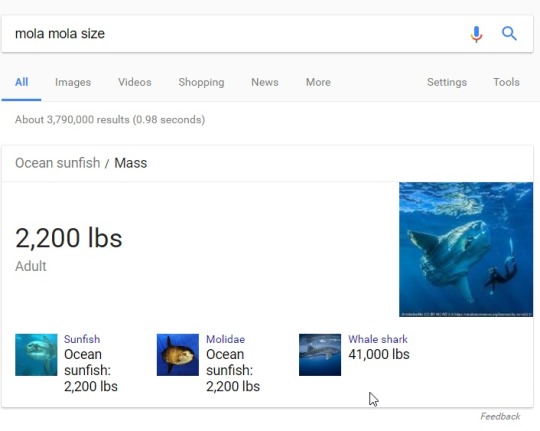
I love them so much because they’re about as sharp as a baseball and their anatomy is ridiculous to the point of them literally being classified as plankton for years because they just sort of get blown around by the ocean and look confused, but because they lay more eggs than ANY OTHER VERTEBRATE IN EXISTENCE, evolution can’t stop them
Why is no big predator coming and gnawing on them?
Their biggest defense is that they’re massive and have super tough skin, but they do get hunted by sharks or sea lions sometimes and they just sort of float there like ‘oh bother’ as it happens
Even funnier, because they eat nothing but jellyfish they’re really low in nutritional value anyway, so they basically survive by being not worth eating because they’re like a big floating rice cracker wrapped in leather.







 A Pretty Taste for Paradox