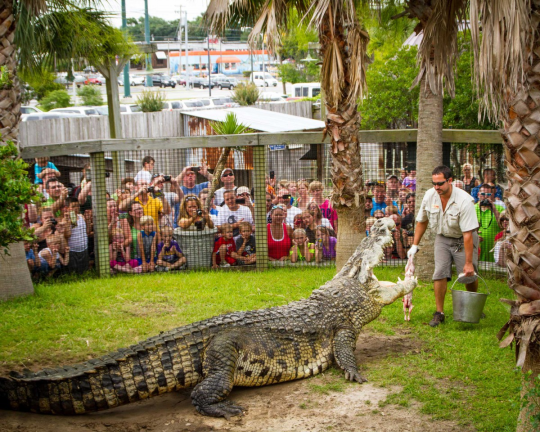
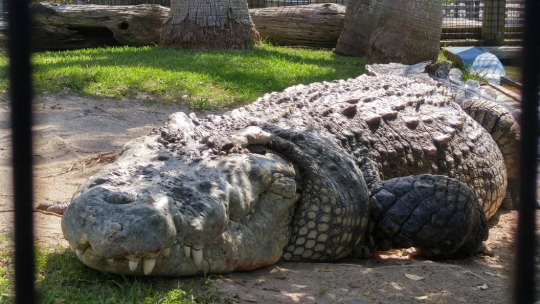
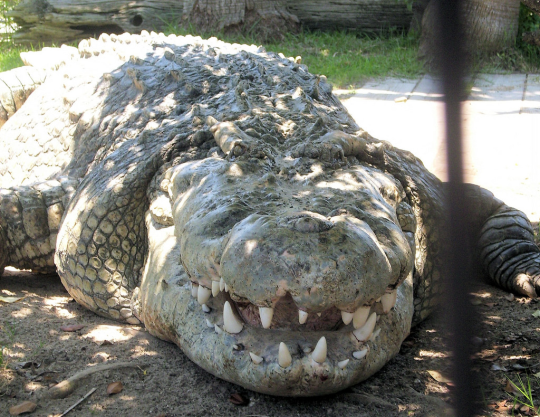
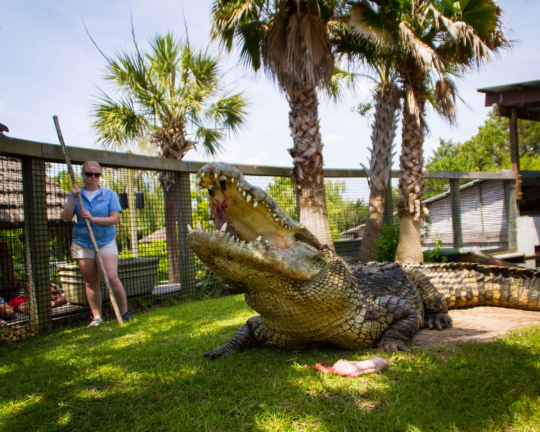
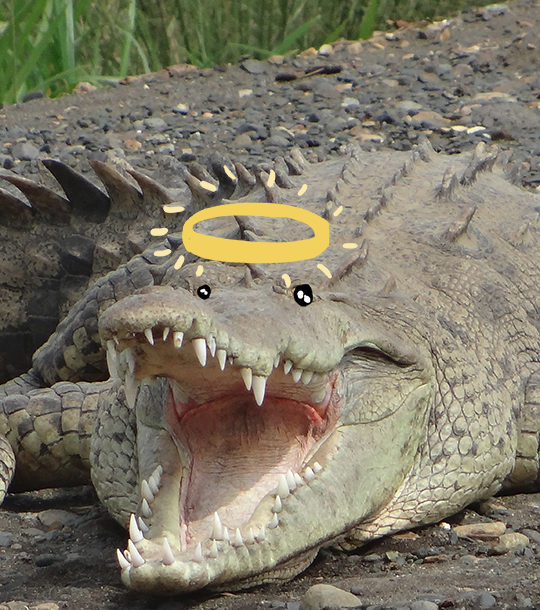
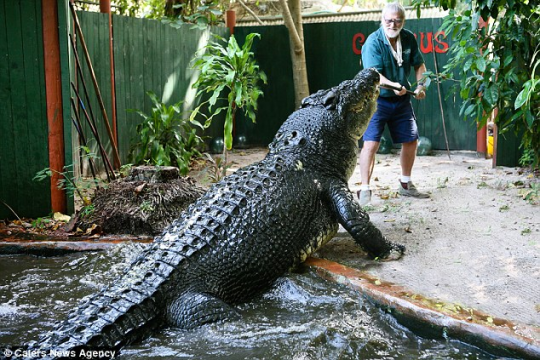
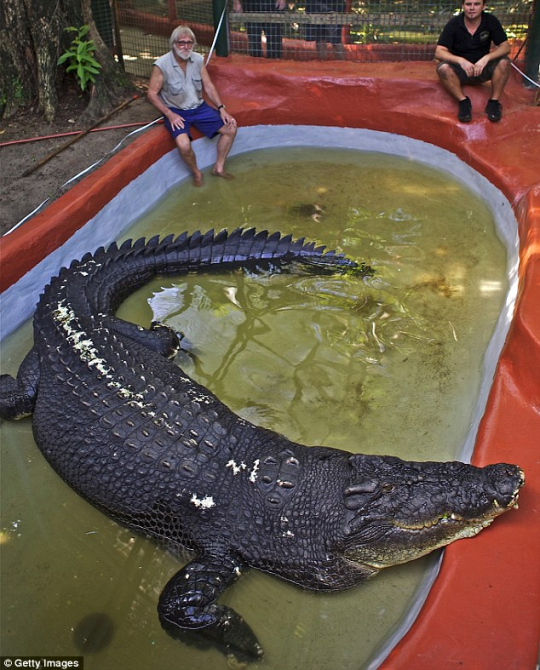
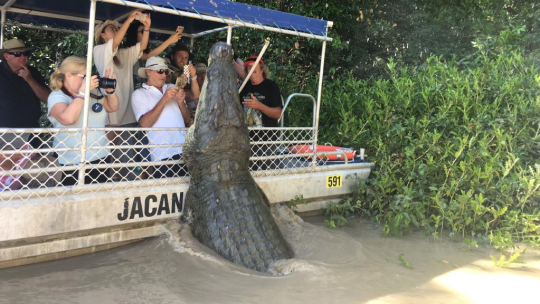
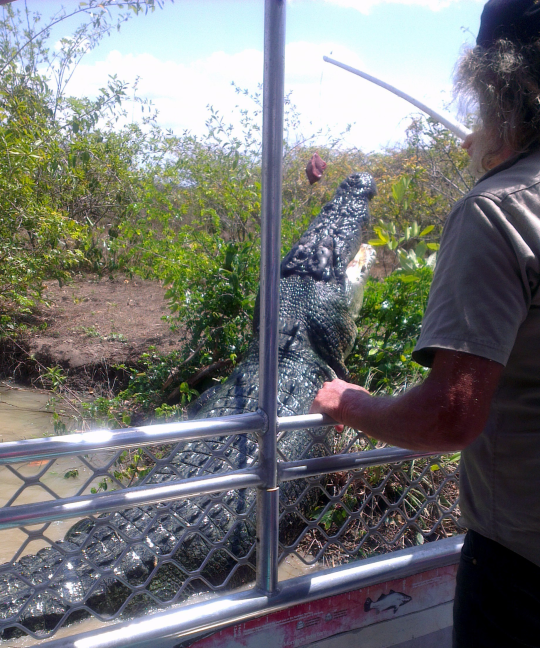
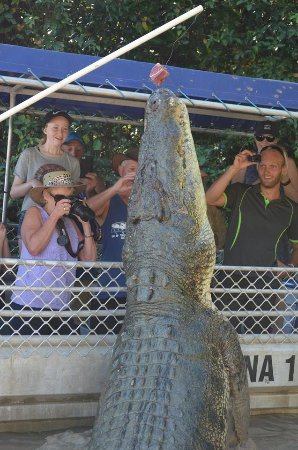
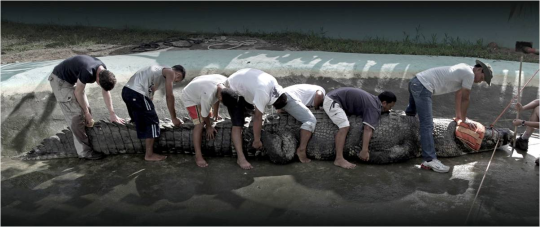
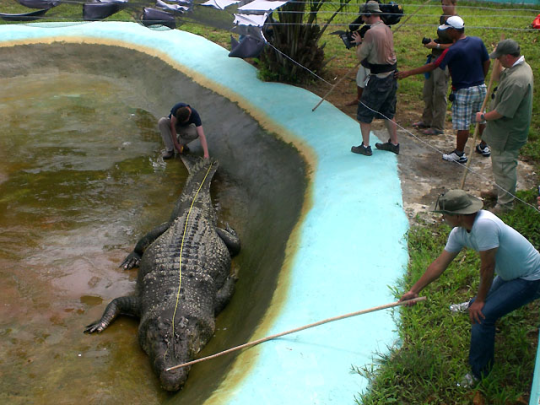
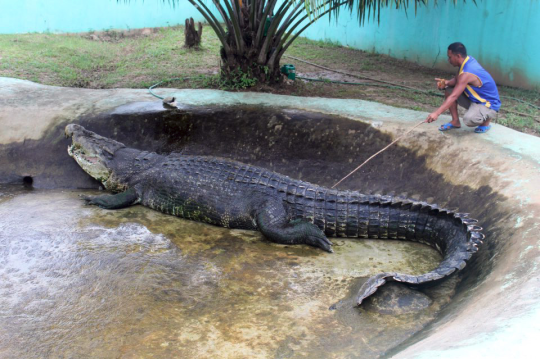
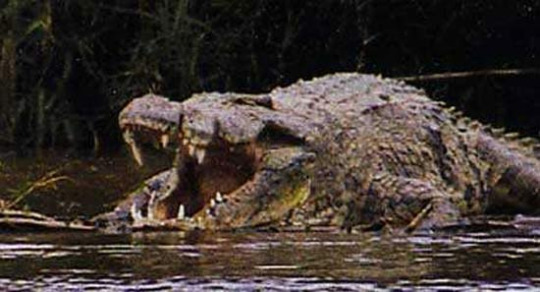
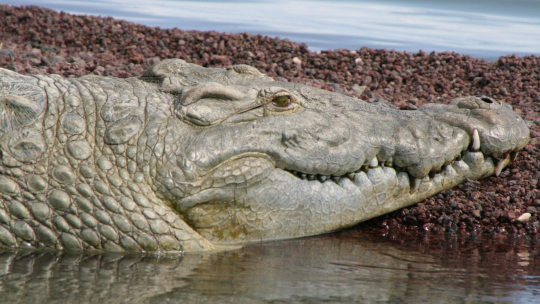
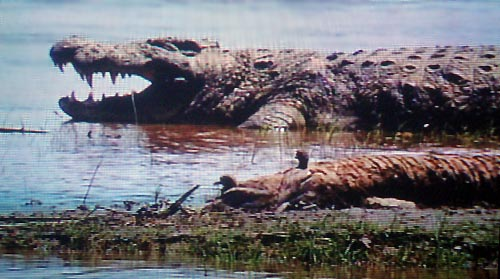
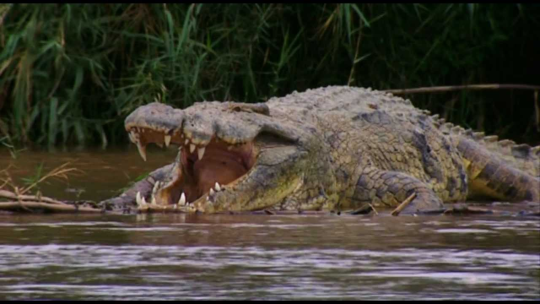
I can’t stop thinking about crocodiles for some reason so here’s some cool pictures I found of probably the second largest one in captivity, his name is Utan:
isn’t he beautiful
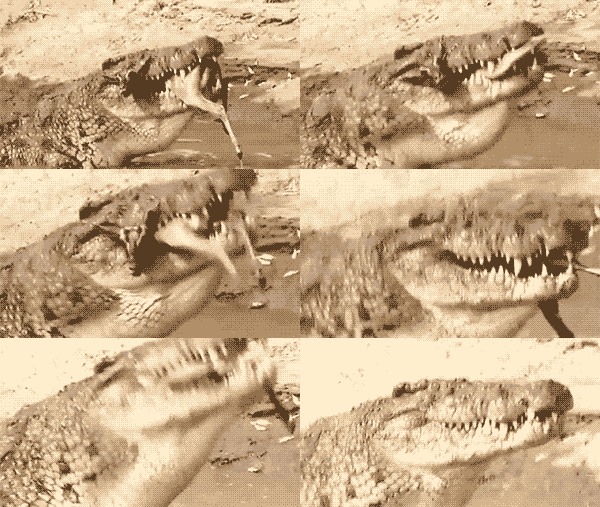
listen to the SOUND when he bites
and that’s not even a real power bite, that’s mostly just heavy bone falling on heavy bone from his jaws and the air rushing out from between them
2000 pounds of Good Boy
you get me
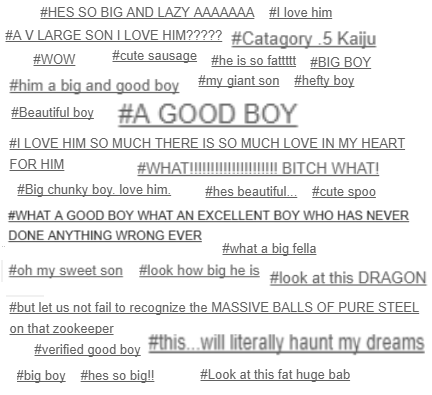
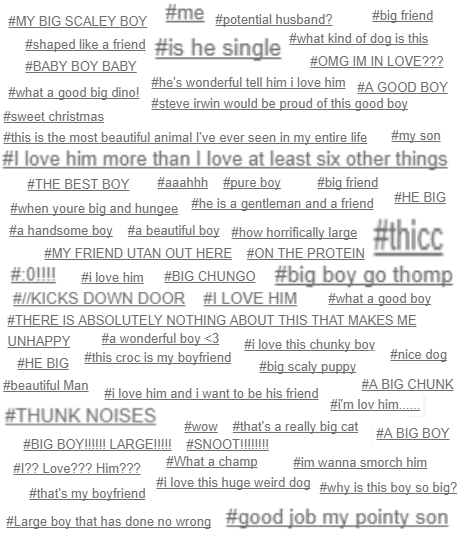
I honestly expected like 5 notes, what HAPPENED here
More tags on this ridiculous post:
Wait, thats the 2nd biggest crocodile? Then what does the biggest one look like?
That would be Cassius, a very old Saltwater crocodile who is estimated to be around 114 years old and lives at Marineland Melanesia in Green Island, Australia. His official measurement is 5.48 meters, which makes him the largest in captivity currently. Because Utan is only slightly smaller and much younger, (only in his 50s), he will likely break Cassius’ record eventually. But for now, Cassius holds the title:
He is NOT, however, either the largest crocodile ever captured in Australia OR the largest ever in captivity.
A slightly larger crocodile has been reported (though not yet comfirmed) to have been captured at 5.58 meters.
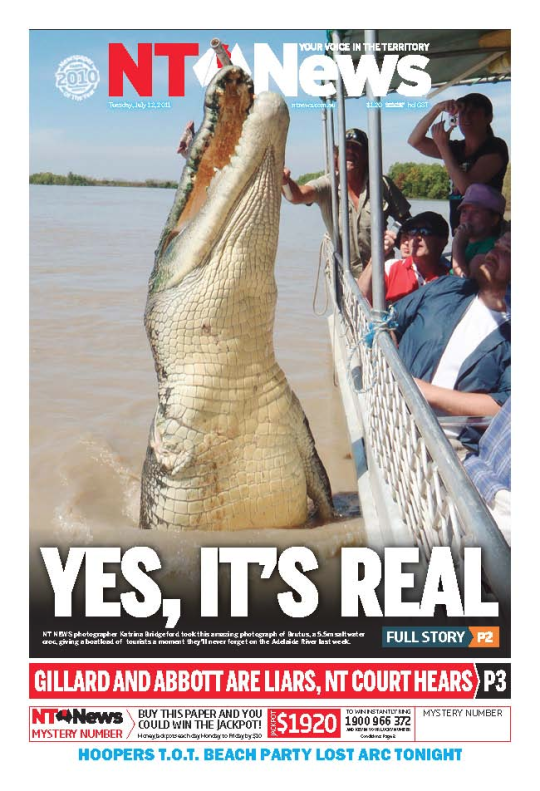
And while the famous Brutus of the Adelaide River was estimated to be just slightly larger than Cassius at 5.5m, he was driven out of his territory by a younger and even larger crocodile, who as a result has been given the name, The Dominator. He is estimated to be just over 6m.
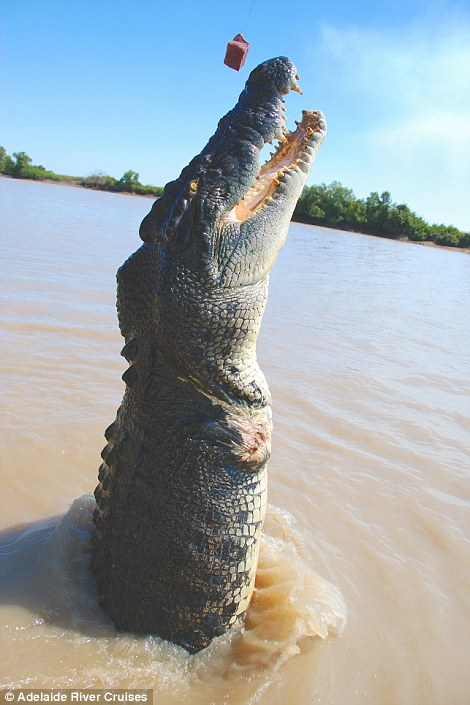
This is Brutus, with an appropriate caption:
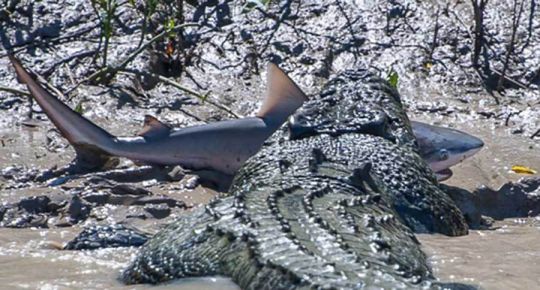
It is believed that he lost that arm in a fight with a Bull Shark.
The Bull Shark lost.
THIS is the crocodile who kicked him out. The Dominator:
And that’s STILL not the biggest.
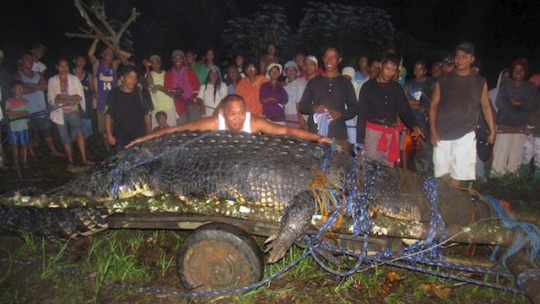
The largest living crocodile ever reliably measured was Lolong, who for the 1.5 years between his capture and his death was the largest crocodile ever held in captivity, at a whopping 6.17 meters (20 feet 3 inches) and 1075 kg (2,370 lbs). He had been feeding on both humans and very large livestock in the Bunawan creek in Agusan del Sur in the Philippines. It took 100 people all night to drag him to shore during his capture.
And here’s why:
Also, to prevent credit from getting buried on a separate reblog, I have been informed that the above image of the crocodile with the cartoon eyes and halo was made by @rashkah! (And it is wonderful and I would like to thank him for its existence, because it perfectly captures my feelings about terrifying giant primordial reptiles.)
As far as Brutus is concerned I was led to believe that he lost that arm when relatively young.
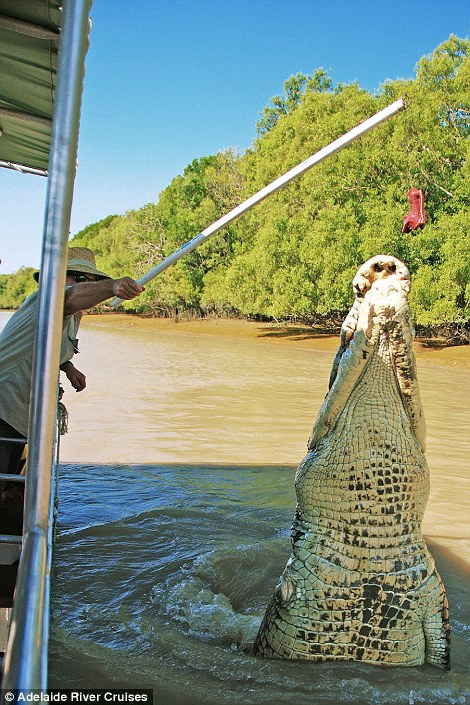
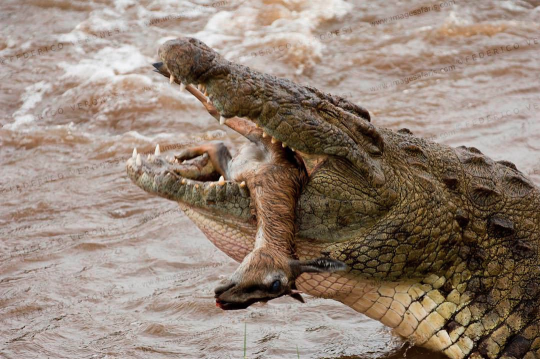
Since then Brutus developed a habit of hunting and eating Bull Sharks.
Here’s him with a prey.
And if you thought that you’ll be safe if you just stay out of Australia then think again!
Meet Gustave the Nile Croc.
This crocodile became almost legendary for both it’s size and the habit of hunting both livestock AND humans.
So how big is Gustave?
No one is sure. Since he was NEVER captured.
His estimated size is of at least 5,5m but some give him over 6m.
The terrifying parts are:
1) He is still growing having only about 60 years.
2) Adult crocodiles often perform a gesture of submission to him – something usually done by young crocodiles toward adults – Gustave is just THAT BIG.
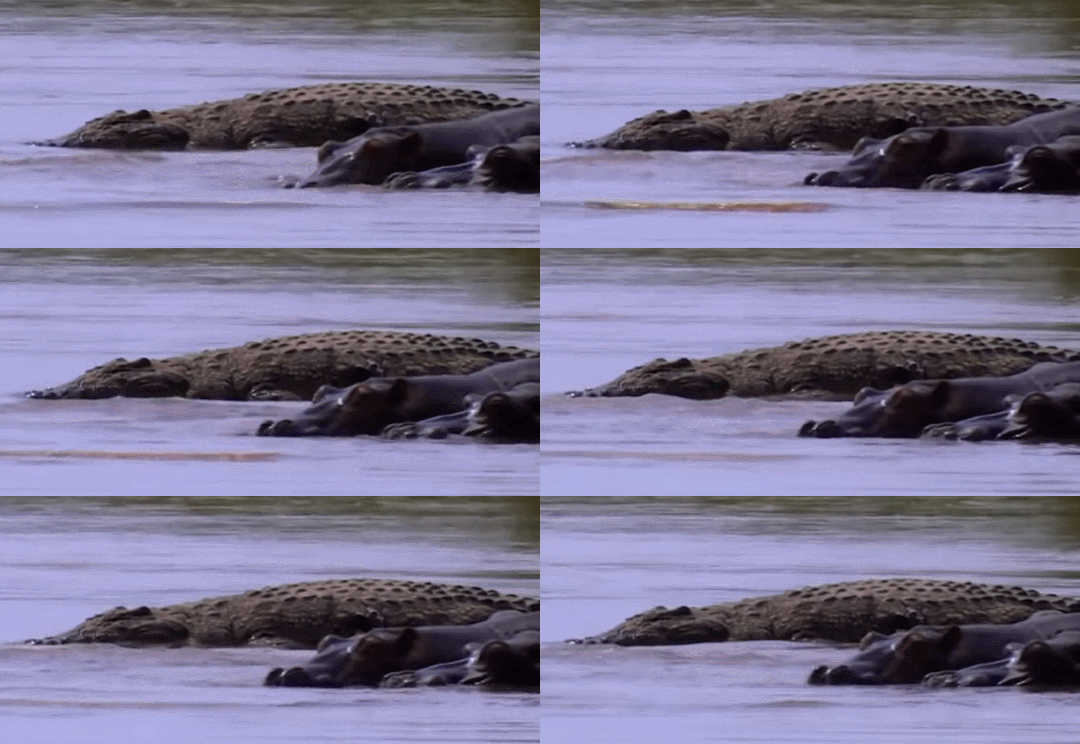
3) His sheer size makes it difficult for him to catch agile prey Nile crocs tend to feed on – hence why he developed a habit of hunting either larger prey like Hippopotamus or creatures which are not good at spotting danger in the first place like livestock and humans.
And this is NOT ALL.
Gustave actually has a noticeable scars on his body – he was shot at east 3 times and stabbed with a spear or something similar at one occasion.
He lived to tell the tale – my question is:
What happened to that one dude who attacked Gustave with a spear?
*Crocodile Dundee voice* Mate, that’s not Gustave:
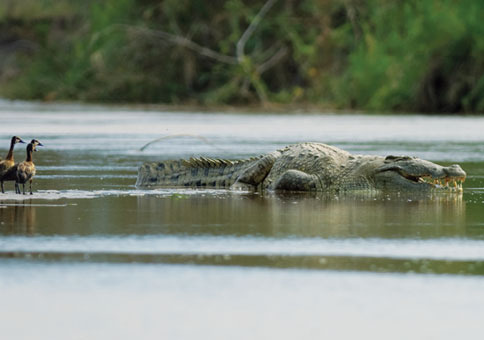
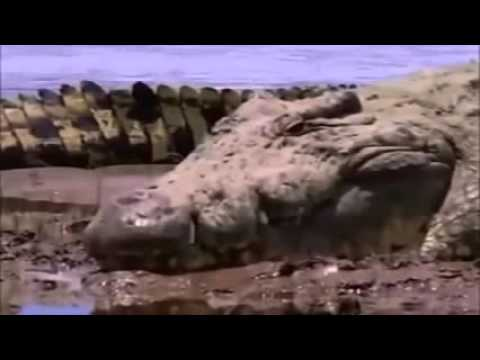
THIS is Gustave:
And he is the PERFECT CROCODILE. He is the perfect example of what I mean when I talk about (as I do) how the morphology of extremely large crocodiles adapts to the changing physics of their bite.
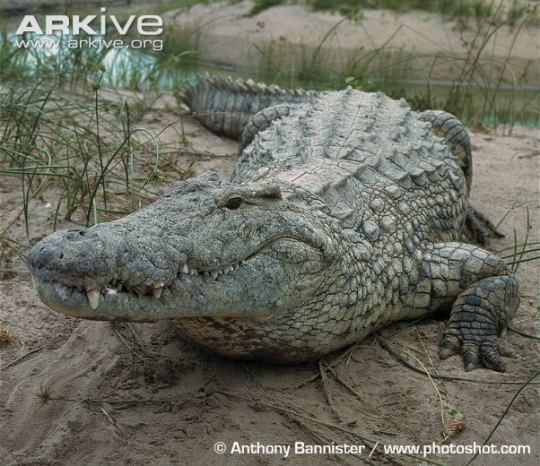
This is a typical adult Nile Crocodile:
And THIS is a god among his kind:
This is it, folks. The Final Form. THIS is what peak performance looks like.
Crocodiles and physics have an interesting relationship. Crocodiles have, by a CONSIDERABLE MARGIN, the strongest bite of any animal on Earth. EVER. Scaled up estimates (based on Nile and Saltwater crocodiles) give the extinct Deinosuchus an estimated bite force MORE THAN DOUBLE the recently updated Tyrannosaurus bite estimates. Living crocodiles have bite forces measured in the range of 5000 pounds per square inch, for an individual around 15-16 feet. It is estimated that modern crocodiles in the range of 18-20 feet would have bit forces around 7-8000 psi or more.
That’s a problem.
Because a crocodile’s skull is only designed to handle so much pressure. Go beyond that limit and the force of impact when those jaws snap shut could literally shatter their own skulls.
But evolution has spent hundreds of millions of years perfecting crocodiles, so PHYSICS ISN’T GOING TO STOP THEM. What ends up happening in the skulls of these extremely large crocodiles is they will increase dramatically in mass to compensate for the increased forces. A crocodile’s skull is almost exclusively solid bone, with only minimal space for nasal passages, a surprisingly advanced brain, and some slightly porous looking framework that helps the bone distribute the force over a larger area. The effect is by far the most pronounced in Nile crocodiles, which most regularly feed on larger prey and need to make use of all that power.
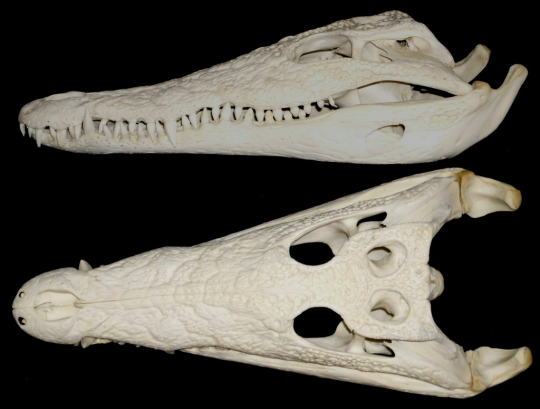
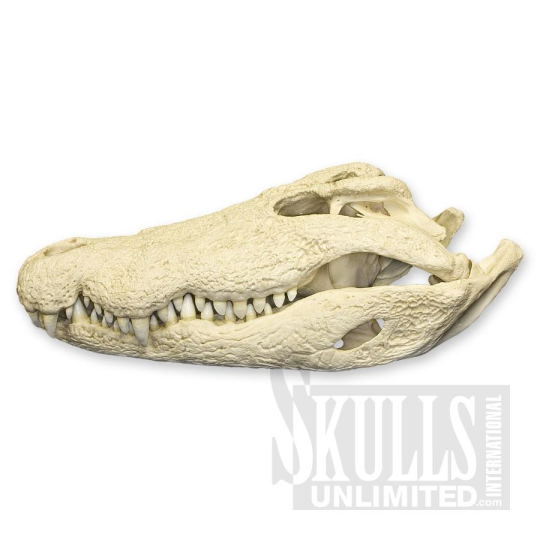
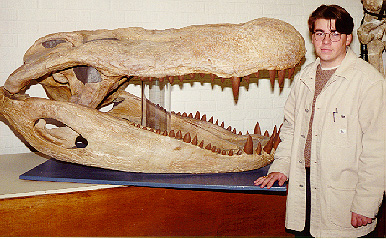
Compare, 26 inch skull:
vs 29 inch skull:
Both of those are Nile crocodile skulls (or rather, replicas thereof).
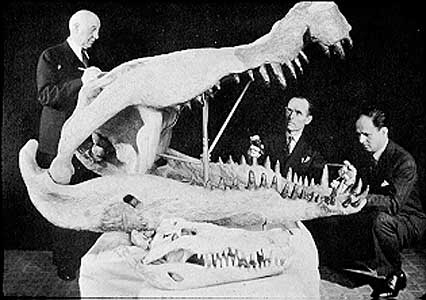
And just for fun, here are the skulls of completely different (and very extinct species), Deinosuchus:
and Purussaurus:
The bigger the crocodile (within a given species), the more massive the skull needs to be to compensate for that UNBELIEVABLE bit pressure. This is one way to see from a distance whether you are looking at a normal sized crocodile:
and a truly extraordinary individual:
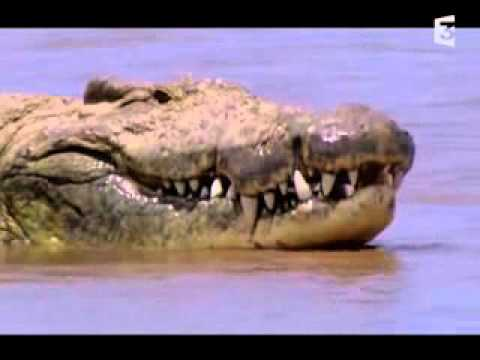
One of the things about Gustave that’s so impressive is how healthy his teeth look. A lot of large crocodiles, in their old age, have very worn down and often missing teeth. They do replace them many times over a lifetime, but when they get very old this slows down. Gustave, at least in every picture taken of him, had teeth that were in very good condition.
Even crocodiles much smaller than Gustave’s reported size (probably similar in size to Dominator or Lolong) tend to have smaller or more worn teeth:
than the pinnacle of his kind:
Lolong! It means Gramps or Grandpa, because he’s a relic of an ancient world where crocs more massive than he was walked the earth. His body is on display somewhere right now though I forgot where.
Every time I see this post there’s more crocodiles. It’s the gift that keeps on giving.
as a kid I always used to be incredulous whenever adults would forget their own ages, or have to take a minute to do the math, but I just told someone I was 26 and didn’t realize that was wrong until they replied and I reread my own comment and was like “…wait a minute, I’m 25″
But the problem with readers, the idea we’re given of reading is that the model of a reader is the person watching a film, or watching television. So the greatest principle is, “I should sit here and I should be entertained.” And the more classical model, which has been completely taken away, is the idea of a reader as an amateur musician. An amateur musician who sits at the piano, has a piece of music, which is the work, made by somebody they don’t know, who they probably couldn’t comprehend entirely, and they have to use their skills to play this piece of music. The greater the skill, the greater the gift that you give the artist and that the artist gives you. That’s the incredibly unfashionable idea of reading. And yet when you practice reading, and you work at a text, it can only give you what you put into it. It’s an old moral, but it’s completely true.
my favorite part of watching The Man From UNCLE is figuring out which sets have been used in which previous episodes
I just want to make it clear re: the last post that I’m not talking about commercial farming, even- my parents’ farm doesn’t make money, and was never intended to- they’re old hippies and their farm is/was about making food for the family, as most farms throughout the majority of human history have been.
by today’s standards, they are “"backyard”“ hobbyist farmers, because they don’t turn a profit, but that doesn’t insulate one from the realities of livestock keeping
reading the cutesy blogs of people who keep chickens primarily as pets (even if they do collect the eggs out of necessity) rather than farm animals is such a trip, honestly it’s like another world from my Chicken Experience
listen I grew up with chickens and loved them and knew their personalities and named a few, because it is impossible to prevent a child from naming animals, but they were still livestock who lived outside and were eaten when they stopped laying (or when they were full-grown, if they were meat birds rather than layers). When you keep chickens there’s a lot of bird shit and chicken bullying (which can lead to fatalities and cannibalism if they’re not separated), and they eat their own eggs (and did I mention shit on every surface??), and occasionally predators (including your own beloved pet cats and/or dogs) do get into the coop and you have to Deal With Death when you have livestock. It’s part of farm life, just as much as moments like ‘getting to hold tiny little new-hatched chicks and feel their soft little downy heads against your cheek as they peep softly in your ear’ are.
When your dog gets old and sick and is suffering too much, you can take him to the vet and have him put down in a nice clean room with a sympathetic vet and have them take the body away if you can’t handle it. When a pine marten gets one of the flock and half-kills her before you can run outside and chase it off, you have to put that bird out of its misery, with your own two hands and probably farm tools, in the mud and blood, because it’s that or let her suffer. And that is what COMES with those sweet baby chick moments, or teaching the flock to come when you call, or having them follow you around the yard, eating the bugs that you kick up from the grass. If you really want to get into homesteading and commit to living close to the soil, you don’t get to opt out of the parts of the soil that involve blood, death, and decay.
someone sending an ask to a chicken hobbyist blog asking for ‘vegetarian chicken blog recs’ because they can’t handle other chicken blogs talking frankly about eating the birds, or chickens dying, isn’t ready to own a farm animal, full stop.
The greatest of these exploring officers was, without a doubt, Major Colquhoun Grant of the 11th Foot. Often the French would look up from whatever they were doing and see Major Grant on horseback, observing them from atop a far-off hill. He would peer at them through his telescope and then make notes about them in his little notebook. It made them most uncomfortable.
Jonathan Strange & Mr Norrell, Susanna Clarke
A funny paragraph, and also 100% accurate, as I found out. A while ago, I picked up a book about intelligence in Wellington’s army – The Man Who Broke Napoleon’s Codes, by Mark Urban. It’s mostly about Sir George Scovell, but it also touches on other intelligence officers, including Grant, and while I was flicking through it, I found this bit that reminded me a lot of Clarke’s description:
The presence of men like Grant deeply unsettled the French. Sometimes a column of infantry marching across a dusty Estremaduran plain would see the glint of a telescope on a nearby hillside and then catch sight of a silhouetted figure on horseback. One Army of Portugal staff officer recorded:
we frequently saw observers of this kind flitting round us. It was vain to give chase to them, even with the best-mounted horsemen. The moment the English officer saw any such approach he would set his spurs to his steed, and nimbly clearing hedges, ditches, even brooks, he would make off at such a speed that our men soon lost sight of him, and perhaps saw him soon after a league further on, notebook in hand, at the top of some hillock, continuing his observations.




 A Pretty Taste for Paradox